On Tools
With the freedom to code design tools, the software landscape is shifting. In this conversation, Martin and Tim unpack arising questions: What exactly defines a good tool? Are modern ecosystems empowering us, or are they dictating our creative boundaries? Where is the room for “inspirational mistakes”, the jazz of design, when software only sees us […]
August 13, 2026
AI, again
Martin: Good Morning Tim! How are you? I am sorry to bother you with another question about AI. Two years ago, we sat on the Taaalks podcast couch and were quite critical of AI. We are still critical of AI, but we also started using it for a couple of tasks. Did you change your […]
February 3, 2026
CS as a Movement
Martin: What if Coding Systems would become a movement? Who would be part of it and what would be our objective? Tim: I can imagine Coding Systems as a part of a larger movement, rather than a movement itself. In Europe, we are in a state of permanent indecision when it comes to information technology. […]
January 15, 2025

Content Creator Incentives
Martin: You and I are talking often about what it means to be a “content creator” today. We produce almost every week new content for our communities and we share it on social media or newsletters. The platforms we use have created incentives that force us to keep up the publication frequency, if we want […]
January 1, 2025

Digital Degrowth
Martin: Let’s talk about Digital Degrowth. What does digital degrowth mean to you? Do you think we need digital degrowth and if so, why and how to make it happen? Tim: This is a great question. I know you are referring to a book which I unfortunately have not read yet, nevertheless, the term is […]
December 18, 2024
VUCA
Tim: Since the turn of the millennium, a term has been increasingly used in the leadership scene to describe the times in which we live. It is the acronym “VUCA”, which groups together the four terms Volatility, Uncertainty, Complexity and Ambiguity. What goes through your mind when you look at these terms? What do you […]
December 4, 2024

The Opportunities of CS
Martin: What are the opportunities of Coding Systems? Coding Systems is our mutual garden, where we grow ideas. Tim: That’s a beautiful question. First of all, most opportunities are not visible yet. To make use of our favorite metaphor: Coding Systems is our mutual garden, where we grow ideas to see where they get. When […]
November 20, 2024
This is our new Content Hub
Dear friends, We have news for you! After a long time of not publishing anythiang but continuously discussing the intersections of Coding and Systems, we finally released a series of conversations we had in the last months and years on our new website: www.codingsystems.info Each conversation has a comment section, which we hope you will […]
November 8, 2024

Coding Systems as Research
Tim: If Coding Systems would be a research project, what would be the question that we are trying to answer? Flexible Visual Systems in the context of Creative Coding should also ask the question of how we think, create, and finally relate through the computer. Martin: The obvious question is how flexible visual system (fvs) […]
November 4, 2024
Translating FVS to Code
Martin: Tim, my turn to ask you a question. You are familiar with the difference between form-based and transformation-based identity systems. How would you translate these two systems in code? No need to enter into specifics. I am more interested in the conceptual framework of code and how it relates to Flexible Visual Systems. Tim: […]
November 4, 2024
Synergies between Systemic and Computational Thinking
Tim: Martin, we have been working together on coding systems now for more than 3 years. The conversations with you broadened my perspective on design a lot, and I am very thankful for having you in my life as a sparring partner and friend. If you would ask me what I have learned on this […]
November 4, 2024
How we work
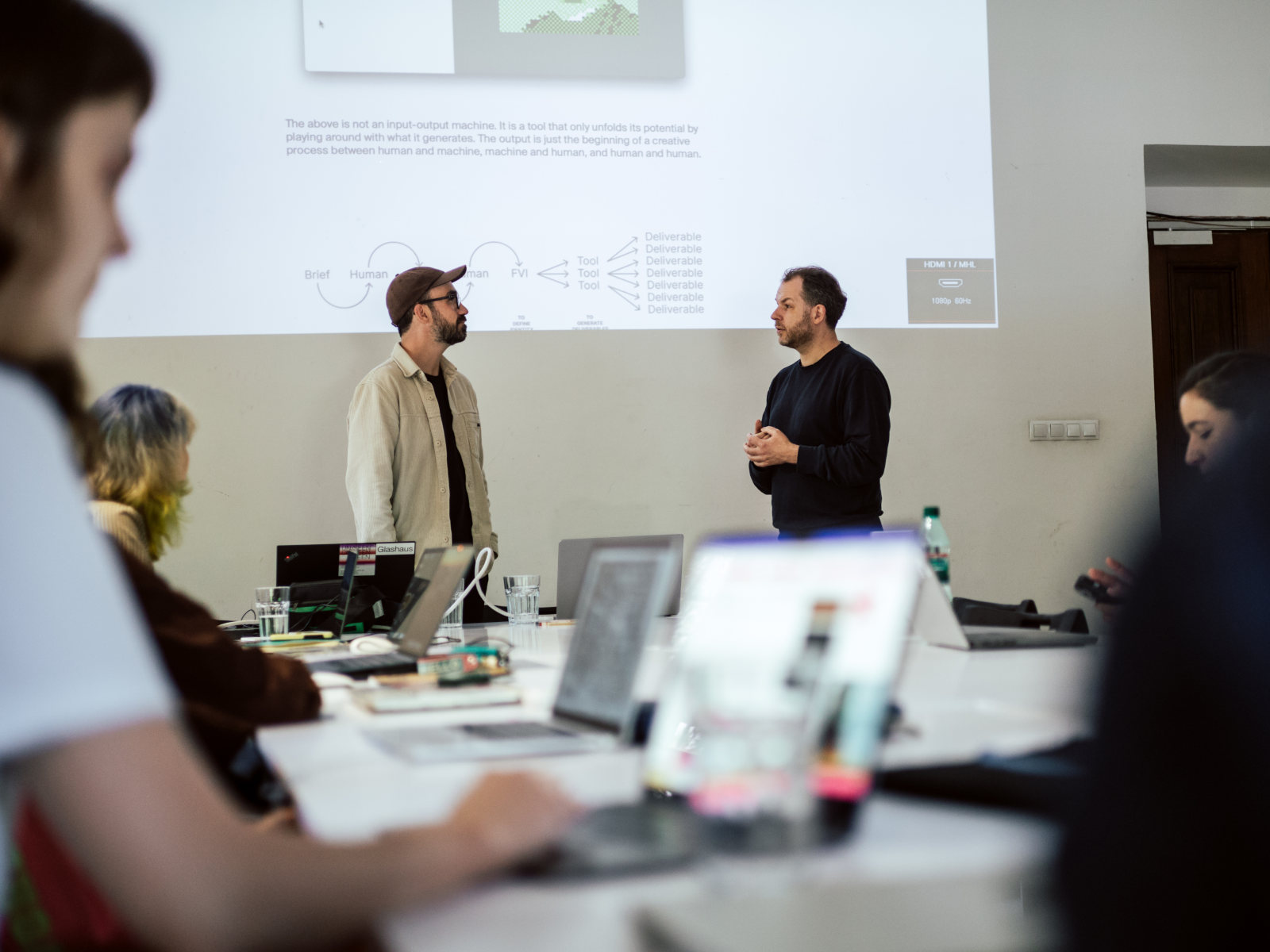
Coding Systems represents a creative endeavor, acknowledging that the outcome of coding is emergent. At its core, Coding Systems emphasizes the human element as the driving force behind the creative process, using technology as a tool. The belief is that technology should amplify thought processes rather than obscure them, with transparency in its incentives and […]
March 23, 2024
Interview with Taaalks
At the beginning of 2023, Tim and I were invited to Munich to have a conversation with Max from Moby Digg for the Podcast “Taaalks”. Max, being a very smart guy and skilled interviewer, touched on a lot of subjects Tim and I haven’t spoken about publicly before. You can watch the video, but as […]
March 23, 2024

The Coding Systems Manifesto
1. Coding Systems is a creative process. The result of coding systems is emergent. 2. Coding Systems is a tool. It codifies flexible systems into a language that makes them executable by machines but used by humans. 3. Coding Systems believes in the human as the driving force behind thinking. Tech should enhance thinking and […]
March 23, 2024

New Language
Tim: Some time ago you recommended to me the Podcast “The Great Simplification” which I love to listen to. In the last Episode, Indy Johar, the founder of Dark Matter Labs was a guest. He’s your colleague and a close partner, since you work at DML as a conversational design director. I loved the language […]
January 29, 2024